- Overview
- Trip Outline
- Trip Includes
- Trip Excludes
- Gallery
- Reviews
- Booking
- FAQ
Card games are a well-loved form of community recreation in Ghana, commonly played in homes, at bus stations, on street corners, and during family or neighborhood gatherings. Unlike physically demanding outdoor games, card games focus on mental sharpness, strategy, and social interaction, making them suitable for people of all ages.
One reason for their popularity is accessibility. A simple deck of cards is affordable and portable, allowing games to be played almost anywhere. Variations such as Ludu, Draughts, or Oware are also widely enjoyed in communities. These games require little setup, making them convenient and inclusive even in places with limited space.
Card games also foster strong social bonds. They create relaxed environments where players and onlookers engage in conversation, jokes, and storytelling while enjoying the competition. This social aspect makes them an important part of community life, especially in the evenings or during leisure time.
Beyond entertainment, card games provide mental benefits. They improve memory, sharpen decision-making, and encourage patience and observation. They also help to build a sense of community identity, as different groups often have their own unique rules and styles of play.
However, challenges exist. Card games are sometimes associated with gambling, which can cause conflict or raise concerns within communities. In some cultural or religious settings, they may even be discouraged. Despite these challenges, card games remain an important recreational activity, combining fun, strategy, and social connection in Ghanaian communities.
No details found.
Includes ✅
-
People of all ages – Children, youth, and adults can play since the game is not physically demanding.
-
Low-cost participation – Only a deck of cards (or local variations like Ludu and Draughts) is needed, making it affordable for everyone.
-
Social bonding – Welcomes both players and spectators, creating lively discussions, laughter, and storytelling.
-
Mental engagement – Includes people who enjoy strategy, critical thinking, and problem-solving.
-
Any location – Games can be played anywhere: homes, lorry stations, school corners, or community spots.
Excludes ❌
-
Those uninterested in gambling associations – In some communities, card games are linked to gambling, which may discourage participation.
-
Religious/cultural restrictions – Some religious groups or cultural settings discourage or forbid card playing.
-
People with limited focus or patience – Since the games require concentration and turn-taking, those unwilling to follow rules may be excluded.
-
Less physical activity – People looking for exercise or active play are excluded, as card games are mostly sedentary.
-
Limited inclusivity for women in some settings – In certain public spaces (like lorry stations), card games are dominated by men, unintentionally excluding women.
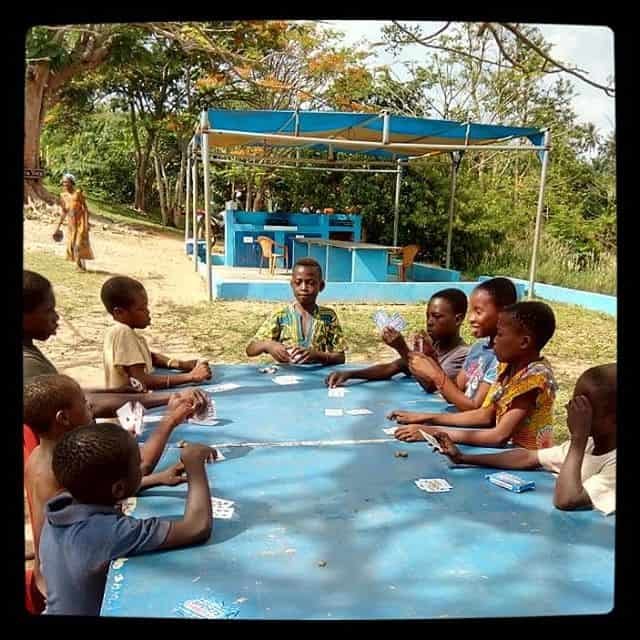
Card games are popular because they are affordable, easy to learn, and can be played anywhere, making them accessible to people of all ages.
They are commonly played in homes, at lorry stations, on street corners, in schools, and during family or community gatherings.
Games like Ludu, Draughts, Oware, and standard playing card games such as Spoons, Whot, and Poker are widely played.
Anyone can participate regardless of age or gender. They are especially enjoyed by youth and adults, but children also learn to play at home and in schools
They provide entertainment, encourage social bonding, improve memory and strategic thinking, and create a fun, relaxed atmosphere for both players and spectators.
Yes. In some communities, card games are linked to gambling, which may create negative perceptions. Some religious or cultural groups also discourage playing cards.
No. A simple deck of cards or traditional boards like Ludu or Oware is enough, making them low-cost and widely accessible.
Card and board-type games like Oware are especially common in Akan-dominated regions such as Ashanti, Eastern, Central, Bono, and Western, while urban areas like Greater Accra also see high card game activity due to population size.
There are no reviews yet.